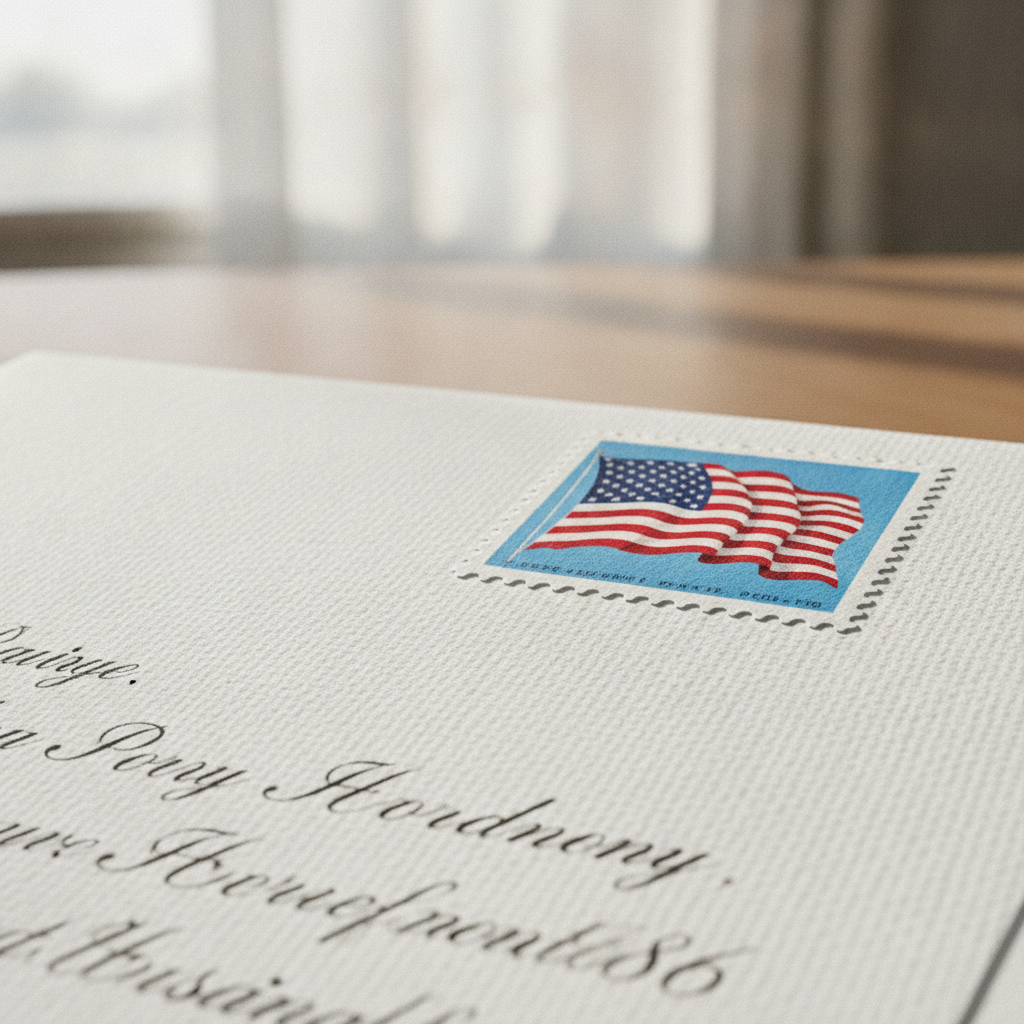
When sending mail in the United States, understanding how postage works can save you both time and money. In this guide, you will learn how forever stamps work, why flag stamps remain the most popular choice for everyday mailing, and how to verify their current value. Whether you are mailing wedding invitations, paying bills, or stocking up before a rate change, knowing the rules of First-Class Mail ensures your envelopes always reach their destination without being returned for insufficient postage.
Key Takeaways
- Universal Validity: Forever stamps never expire and always cover the one-ounce First-Class Mail letter rate, regardless of future price increases.
- Iconic Design: US flag stamps are the most widely produced non-denominational stamps, issued annually in booklets, coils, and sheets.
- Financial Savvy: Purchasing stamps in bulk before scheduled USPS rate hikes is a legitimate way to lock in lower mailing costs.
How Do Forever Stamps Maintain Their Value Over Time?
Introduced by the United States Postal Service (USPS) in 2007, the Forever stamp revolutionized how consumers purchase postage. Prior to this change, consumers had to buy low-value “make-up” stamps whenever postal rates increased. Today, a Forever stamp represents a constant regulatory value rather than a monetary denomination printed on the face.
The core benefit of these stamps is their inflation-proof nature. When you purchase a stamp today, it will transition seamlessly through any future rate adjustments. If you buy a booklet of stamps at today’s rate, they will still fully cover the cost of mailing a standard one-ounce letter five, ten, or twenty years from now without requiring additional postage.
Why Are US Flag Stamps the Preferred Choice for Everyday Mailing?
Among the various designs offered by the postal service, US flag stamps are consistently the highest-volume print runs. These stamps feature patriotic imagery of the American flag, often set against striking backdrops like clear blue skies, historic landmarks, or stylized graphics. The USPS updates this design regularly to refresh the aesthetic while maintaining the core patriotic theme.
Flag stamps are highly versatile and widely accepted for both personal and professional correspondence. Because they carry a neutral, respectful, and classic design, they are equally appropriate for business invoices, holiday cards, and everyday letters. They are typically sold in three convenient formats: booklets of 20 for household use, coils of 100 for small businesses, and large sheets for high-volume mailing operations.
How Can You Identify Genuine USPS Flag Stamps and Avoid Counterfeits?
With the rise of online marketplaces, counterfeit postage has become a significant issue. Scammers often target search terms like “cheap forever stamps” or “discount flag stamps,” offering rolls of stamps at 30% to 50% off retail prices. The USPS does not discount stamps to third-party retailers to a degree that allows for such massive consumer discounts, meaning these offers are almost always fraudulent.
Using counterfeit postage is a federal crime that can result in your mail being confiscated, returned to sender, or destroyed. To protect yourself, always purchase your postage directly from authorized retailers, such as local post offices, major national grocery chains, or the official USPS website. For detailed verification methods and official policies, refer to the USPS official postage guidelines to ensure your mail pieces comply with federal standards.
Genuine stamps feature specific security details, including microprinting, precise die-cuts, and phosphorescent ink that glows under ultraviolet light. If a deal online looks too good to be true, it is safest to assume the stamps are counterfeit.
What Are the Current USPS Rates and Scheduled Increases?
The USPS operates under a regulatory framework that allows for biannual rate adjustments, typically occurring in January and July. These adjustments help the postal service offset inflation, declining mail volumes, and operational costs. For example, the price of a First-Class Mail Forever stamp has steadily risen over the past decade, climbing from 49 cents in 2017 to over 70 cents in recent years.
Understanding this schedule allows smart consumers and business owners to plan ahead. By monitoring announcements from the Citizens’ Stamp Advisory Committee and the Postal Regulatory Commission, you can anticipate rate hikes. Buying several coils of flag stamps right before a scheduled rate increase allows you to legally bypass the price hike for your upcoming mailings, yielding immediate cost savings.
How Do You Properly Use Flag Stamps on Non-Standard Mail?
While a single flag stamp covers a standard, flat, one-ounce letter, not all mail pieces are created equal. If your envelope exceeds one ounce, is oversized, or is rigid (such as a square wedding invitation or an envelope containing a stiff card), it may require additional postage. The USPS charges a “non-machinable surcharge” for envelopes that cannot pass through automated sorting machines.
For these specialized mailings, you can still use your standard flag stamps, but you will need to add additional ounce stamps or non-machinable surcharge stamps to cover the difference. Always weigh your mail piece or visit a local post office to ensure you have applied the correct total value before dropping your letters into a collection box.
To ensure your next mailing goes smoothly, take a moment to audit your current stamp supply. Checking the weight and dimensions of your envelopes before applying your US flag stamps will guarantee prompt delivery and prevent any unexpected delays in transit.