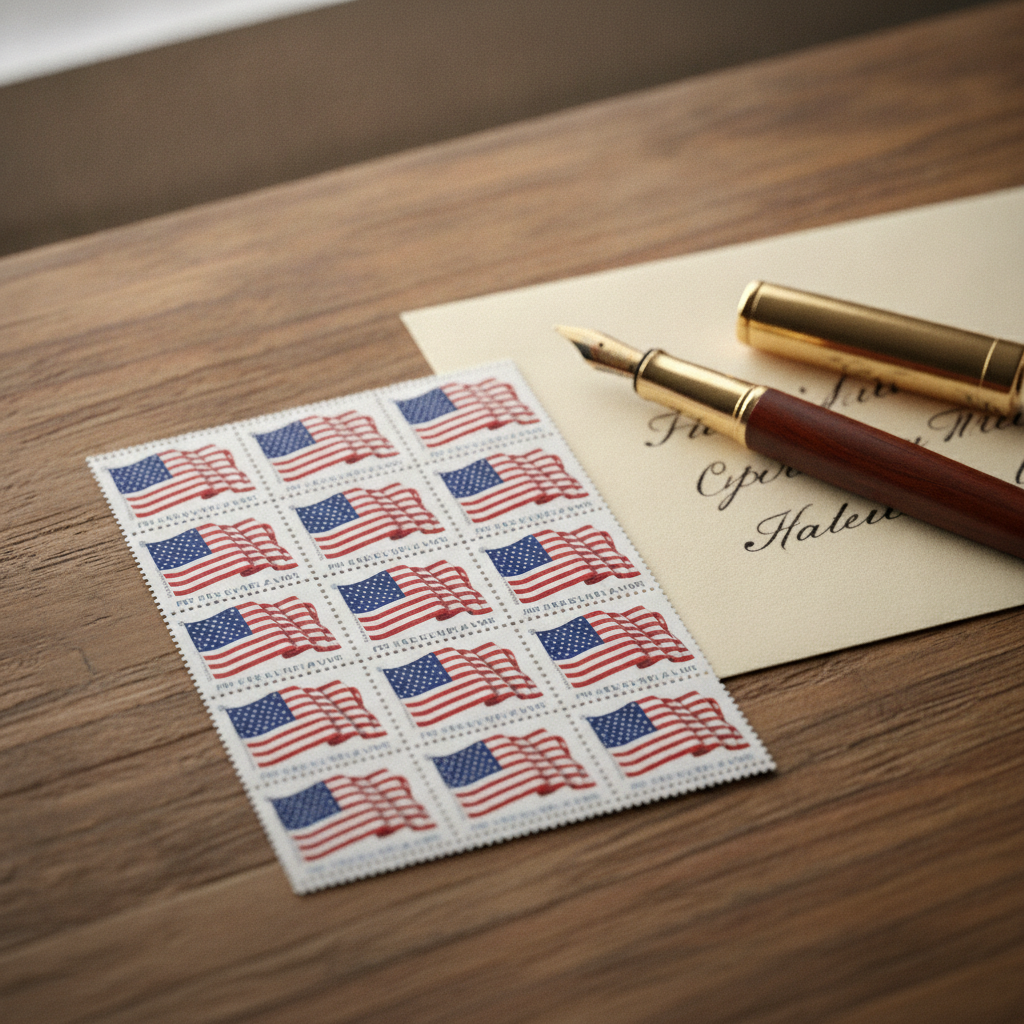
Sending mail efficiently requires understanding how modern postage works. In this guide, you will learn how forever stamps maintain their value, why flag stamps remain the most popular choice for everyday mailing, and how to avoid counterfeit postage online. Whether you are mailing wedding invitations, paying bills, or collecting classic US stamps, understanding current postal rates and design options will save you time and money.
- Never Expire: Forever stamps always cover the one-ounce First-Class Mail rate, regardless of future price increases.
- Iconic Designs: Flag stamps are the most widely produced and recognized class of definitive postage in the United States.
- Secure Purchasing: Buy only from authorized retailers or the official postal service to avoid widespread online counterfeit scams.
How Do Forever Stamps Work Under Current Postal Regulations?
First introduced in 2007, non-denominated postage revolutionized how we send mail. Prior to this change, consumers had to buy low-value stamps (like 1-cent or 2-cent stamps) whenever rates increased. Today, a Forever stamp always matches the current First-Class Mail single-piece one-ounce price, protecting buyers from inflation.
This means if you buy a sheet of stamps today, they remain fully valid for mailing a standard letter ten years from now, even if postage prices double in the meantime. They are an excellent hedge against inflation for small businesses and households alike. The value of these stamps automatically adjusts to the prevailing rate on the day of mailing, not the day of purchase.
Why Are Flag Stamps the Preferred Choice for Everyday Mailing?
Among the various designs offered by the United States Postal Service, flag stamps are classified as definitive stamps. Unlike commemorative issues that have limited print runs, definitive postage is printed continuously to meet daily operational demands. They are the workhorses of the postal system, ensuring that businesses and individuals always have access to standard postage.
The American flag design symbolizes national identity and is available in multiple formats, including convenient booklets of 20 and large coils of 100 for high-volume mailers. These designs are updated regularly to feature subtle aesthetic changes, such as the flag draping over a porch or fluttering against a clear blue sky, making them both functional and visually appealing for all types of correspondence.
The Evolution of Flag Stamp Designs
Over the decades, the depiction of the American flag on postage has evolved significantly. From simple, static illustrations in the mid-20th century to highly detailed photographic reproductions today, these stamps reflect contemporary design trends. The inclusion of patriotic themes on everyday mail remains a deeply rooted tradition that resonates with millions of senders daily.
How Can You Verify Authentic Postage and Avoid Online Scams?
The rise of online marketplaces has unfortunately led to a surge in counterfeit postage scams. Scammers often advertise “discounted” sheets of flag stamps at 30% to 50% off retail prices on social media platforms and third-party websites. These deals are almost always too good to be true and involve sophisticated counterfeit operations.
According to official alerts from the U.S. Postal Inspection Service counterfeit stamp warning, purchasing postage from unauthorized third-party sellers carries a high risk of receiving counterfeit goods. The postal service actively detects and confiscates mail bearing fake postage, which can result in your important letters being returned to sender or destroyed. To ensure your mail reaches its destination, always purchase your postage directly from post office locations, official retail partners, or verified grocery chains.
Key Indicators of Genuine Stamps
Genuine postage possesses specific security features that are difficult for counterfeiters to replicate. Look for microprinting, which is incredibly sharp text that is only legible under a magnifying glass. Additionally, authentic issues feature precise die-cuts and a specialized phosphor taggant coating that glows under ultraviolet light, which automated mail-sorting machines use to verify postage.
If you suspect you have purchased counterfeit stamps, compare them closely with a known authentic stamp from the post office. Counterfeits often have a duller color profile, blurry text, or a strange chemical smell from cheap adhesives. Using these fakes can lead to federal penalties, making verification a critical step for any high-volume mailer.
How Do You Calculate Postage for Non-Standard Mail?
While a single Forever stamp covers a standard one-ounce letter, heavier or oddly shaped mail requires additional postage. For letters weighing over one ounce, you must add “additional ounce” stamps to cover the extra weight. Alternatively, you can use multiple standard stamps, though this often results in overpaying the exact rate.
If you are mailing square envelopes, rigid greeting cards, or letters that cannot pass through automated sorting machines, you will need to apply a non-machinable surcharge. Postcards also have their own dedicated, lower-cost category of postage, allowing you to save money on shorter correspondence. Always check the physical dimensions of your mailpiece before applying postage to avoid delivery issues.
To streamline your mailing process, keep a mix of standard flag stamps and low-denomination postage on hand. Before sending out your next batch of mail, weigh your envelopes on a digital kitchen scale to ensure you have applied the correct postage value. Taking these small steps guarantees your letters arrive promptly without unexpected delays or return-to-sender penalties.