Why does a tiny, adhesive square of paper continue to spark intense economic debates and hoarding behaviors in an era dominated by instant digital communication? The humble postage stamps we affix to envelopes are more than mere proof of payment; they are complex financial instruments and cultural artifacts. When the United States Postal Service introduced the concept of forever stamps, it quietly revolutionized consumer behavior and postal economics. This analytical critique deconstructs the actual value, design philosophy, and systemic utility of these ubiquitous physical tokens.
To understand the modern postal landscape, one must first dismantle the illusion of simplicity surrounding these paper vouchers. Far from being static utilities, they represent a dynamic intersection of government monopoly, public logistics, and inflation hedging. As digital alternatives multiply, the strategic role of physical postage becomes increasingly contested and fascinating.
The Financial Mechanics of Forever Stamps
Introduced in 2007, the non-denominational postage model was a masterclass in behavioral economics. By eliminating the monetary value printed on the face of the stamp, the postal service solved a massive logistical headache for both itself and its consumers. Prior to this shift, every minor rate increase necessitated the printing and purchasing of tedious one-cent and two-cent stamps to make up the difference.
From a critical perspective, this transition functioned as a subtle form of forward contracting for the public. Consumers were suddenly empowered to purchase future delivery services at current prices, effectively locking in rates. For the USPS, this provided an immediate influx of liquid capital, acting as an interest-free loan from the public. It was a brilliant short-term cash flow strategy disguised as consumer convenience.
However, the long-term value proposition for the consumer requires a more cynical calculation. While buying forever stamps before a scheduled rate hike yields a clear percentage return, the absolute dollar amounts are trivial for the average household. Unless one is operating a high-volume direct mail business, the opportunity cost of tying up capital in non-refundable paper assets outweighs the marginal savings. Stamps cannot be easily liquidated back into cash, making them an incredibly illiquid hedge against inflation.
Aesthetic Monotony: The Ubiquity of Flag Stamps
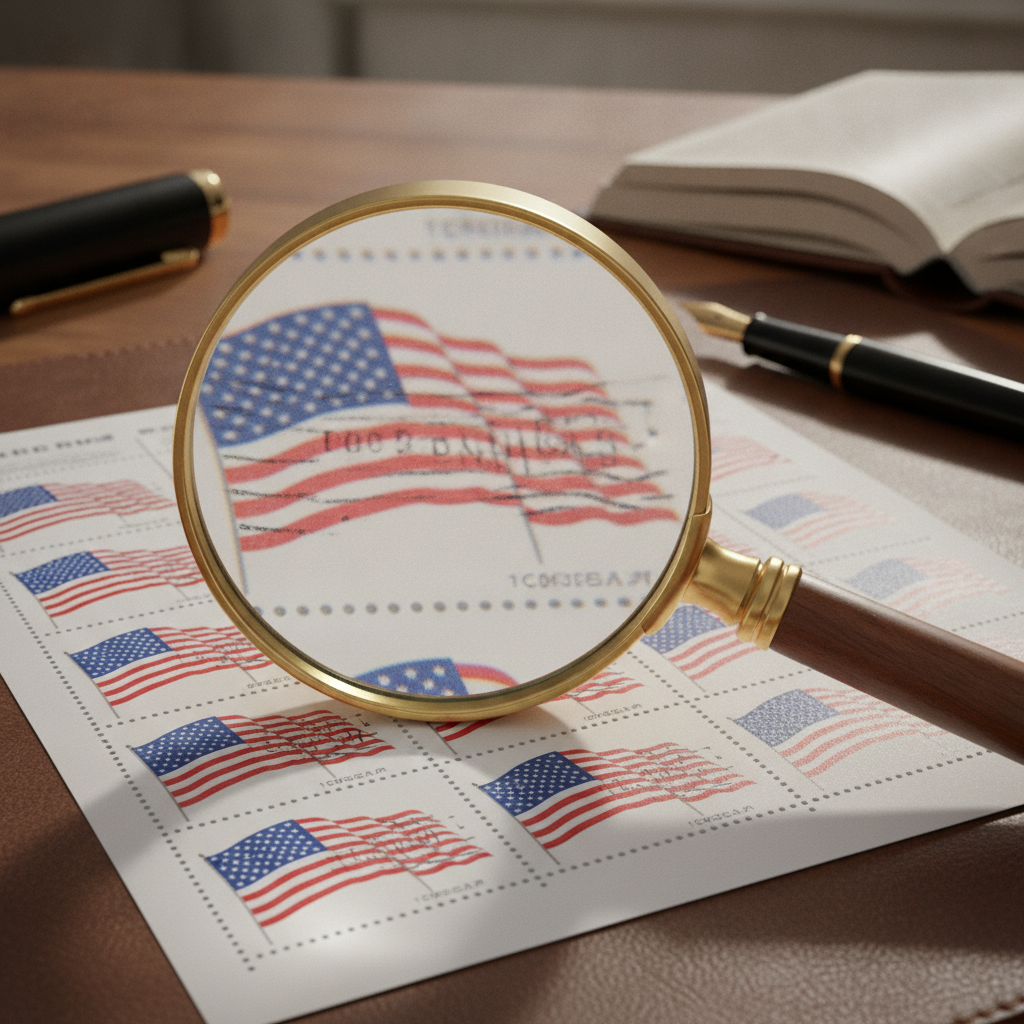
Design is never neutral; it is a manifestation of institutional priorities and cultural messaging. Among the vast array of available designs, flag stamps remain the most widely produced and distributed variants in the nation. This dominant position is not accidental, but rather a calculated decision balancing mass appeal with political neutrality. The American flag serves as a universal brand identity that offends the fewest sensibilities while reinforcing state authority.
Yet, from an artistic standpoint, the relentless repetition of patriotic motifs can border on visual exhaustion. While commemorative issues celebrate diverse historical figures, scientific achievements, and artistic movements, the standard definitive stamp remains resolutely conservative. This aesthetic stagnation suggests a missed opportunity to utilize the nation’s most widely circulated canvas for contemporary cultural expression. Instead, the institution defaults to safe, nationalistic iconography that requires minimal creative risk.
Furthermore, the physical design of modern flag stamps has evolved to prioritize automation over artistry. The clean, vector-based graphics are optimized for high-speed optical character recognition (OCR) and sorting machinery. The intricate, hand-engraved details of classic nineteenth-century postage have been replaced by flat, sterile digital renders. This shift reflects a broader systemic transition where aesthetic value is systematically sacrificed on the altar of operational efficiency.
The Operational Reality of USPS Stamps
To appreciate the scale of this operation, one must look at the sheer volume of production managed by the federal government and its private contractors. Millions of usps stamps are printed daily under strict security protocols that rival those of currency production. The paper stock, adhesives, and inks utilized are highly specialized to prevent counterfeiting and ensure durability under harsh environmental conditions.
The integration of phosphorescent tagging is a prime example of this invisible technology. When letters pass through sorting facilities, specialized ultraviolet sensors detect these chemical markers to verify authenticity and orient the envelope. This technological layer transforms a simple piece of paper into a machine-readable barcode. It is a sophisticated industrial process hidden behind a familiar, low-tech facade.
Despite these advancements, the physical distribution network remains a massive financial burden. Transporting, storing, and securing physical inventory across thousands of retail locations incurs substantial overhead. In an era where digital barcodes and printed shipping labels can be generated instantly at home, the survival of the physical stamp sheet is a testament to legacy systems. It persists largely because a significant portion of the population remains disconnected from or distrustful of digital alternatives.
Postage Stamps as Micro-Investments: Myth vs. Reality
The concept of hoarding stamps as a hedge against rising postal rates has gained traction in personal finance forums. Proponents argue that since the price of mail delivery consistently outpaces general inflation, acquiring large quantities of stamps is a guaranteed winning trade. On paper, the mathematics of this argument appear sound, especially during periods of rapid rate adjustments. When the cost of a first-class mailing increases by several cents, the paper value of your existing inventory jumps instantly.
Nevertheless, this micro-investment strategy suffers from several structural flaws that critics often overlook. First and foremost is the issue of transaction costs and market liquidity. You cannot pay your utility bills, buy groceries, or settle debts using sheets of unused stamps. Attempting to liquidate a large collection of forever stamps usually requires selling them at a steep discount on secondary markets, erasing any accrued gains.
Additionally, physical preservation introduces risks of damage, loss, and theft. Moisture, heat, and improper storage can easily ruin the adhesive or degrade the paper, rendering the stamps unusable. Therefore, treating these items as a serious asset class is fundamentally misguided. They are service vouchers, not commodities, and their true value lies solely in their redemption for physical transport.
The Digital Threat and the Strategic Pivot
The existential crisis facing physical mail is undeniable as email, digital billing, and secure messaging platforms continue to cannibalize paper volume. In response, the postal service has had to reinvent the role of its core products. Stamps are no longer just functional necessities; they are increasingly marketed as premium, nostalgic, and emotional goods. The act of sending a physical letter has transformed from a mundane chore into a deliberate, sentimental statement.
This strategic pivot is highly visible in the marketing of commemorative releases. By targeting niche hobbyists, pop culture fandoms, and collectors, the USPS has successfully tapped into the lucrative collectibles market. These specialized stamp sheets are frequently purchased with no intention of ever being used for postage. This represents pure profit for the postal system, as they pocket the revenue without ever having to perform the delivery service.
However, this reliance on collector premium is a fragile foundation for a massive public infrastructure. While philatelic sales provide welcome revenue spikes, they cannot offset the systemic decline in transactional mail. The challenge lies in maintaining the relevance of physical correspondence among younger generations who have grown up entirely within digital ecosystems. Without a fundamental shift in how physical mail is perceived, the traditional stamp risks becoming a historical curiosity.
The Security Architecture of Modern Mail
In an age dominated by cybersecurity threats, the physical security of our mail systems is often taken for granted. Yet, the postage stamp serves as the first line of defense against systemic abuse and fraud. Microprinting, specialized die-cuts, and hidden watermarks are routinely integrated into modern designs to thwart counterfeiters. These measures are critical because counterfeit stamps directly undermine the revenue model of the postal service.
In recent years, the rise of sophisticated online marketplaces has led to an influx of counterfeit forever stamps sold at impossibly low prices. This illicit trade has forced the USPS and federal law enforcement to escalate their detection efforts. The introduction of advanced scanning technology at processing centers now allows for the real-time identification of fraudulent postage. Consequently, using counterfeit stamps has become a high-risk endeavor with severe legal penalties.
This ongoing battle highlights the paradoxical nature of the physical stamp. It is a deceptively simple object that requires a massive, high-tech security apparatus to protect its integrity. As counterfeiters become more sophisticated, the cost of securing physical postage will inevitably rise. This dynamic raises critical questions about the long-term sustainability of physical stamps compared to cryptographic digital alternatives.
The Psychological Value of Tangible Correspondence
Despite the overwhelming efficiency of digital communication, physical mail possesses a unique psychological weight that pixels cannot replicate. A handwritten letter adorned with a carefully selected stamp conveys a level of intentionality and effort that an email simply cannot match. The tactile experience of opening an envelope creates a sensory connection between the sender and the recipient. This emotional resonance is the primary reason physical mail continues to endure in a digital world.
From an analytical perspective, this emotional value is a highly marketable commodity. The USPS has recognized this trend by focusing on high-quality, visually appealing stamp designs that enhance the aesthetic appeal of personal correspondence. By transforming the stamp from a utility into an ornament, they encourage consumers to view mailing as an artisanal experience. This strategy successfully leverages nostalgia to sustain demand for physical postage.
Yet, this artisanal market is inherently smaller than the mass transactional market of the past. While wedding invitations, holiday cards, and personal letters will likely persist, they cannot match the volume of business mailings. The postal service must therefore balance its role as a romanticized cultural institution with its mandate to provide universal, affordable utility. Navigating this transition will define the future of physical mail for decades to come.
Ultimately, the true utility of physical postage lies in its ability to bridge the gap between the physical and digital worlds. While digital communication offers unmatched speed, it lacks the permanence, security, and emotional depth of physical mail. By understanding the economic, design, and operational realities of these paper tokens, consumers can make more informed decisions about how they communicate. The next time you place a stamp on an envelope, consider the vast, complex system you are activating with that single, simple gesture.