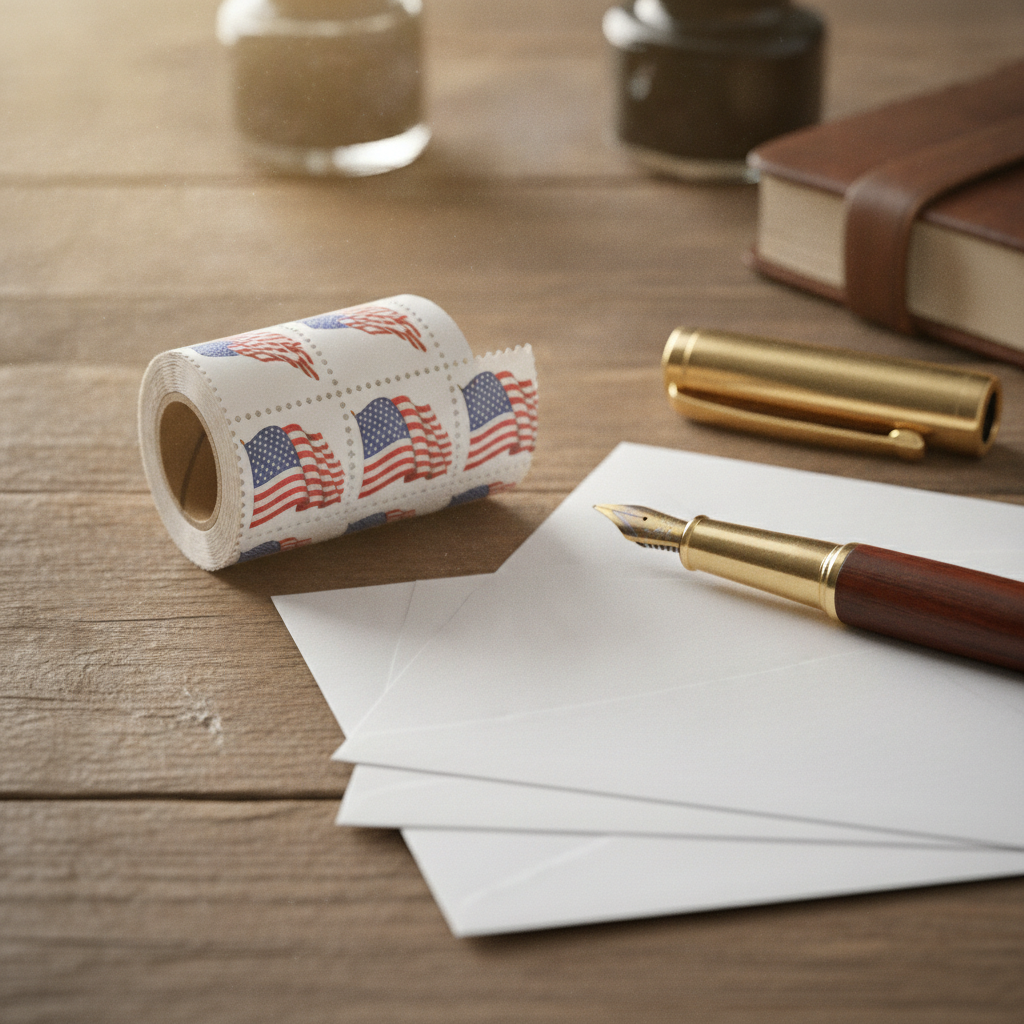
Whether you are mailing wedding invitations, paying bills, or sending holiday cards, understanding how postage works saves you time and money. In this guide, you will learn how modern USPS stamps, specifically Forever stamps and the iconic flag stamps, protect you against rising postal rates. We will cover their current value, how to identify genuine postage, and where to purchase them safely so you never have to worry about underpaying for your First-Class Mail.
- Inflation Protection: Forever stamps always equal the current First-Class Mail one-ounce rate, regardless of when you bought them.
- Design Consistency: U.S. flag stamps are the most widely produced non-denominated stamps, symbolizing reliable domestic delivery.
- Security: Purchasing postage only from authorized retailers protects you from the growing market of counterfeit stamps.
How Do USPS Forever Stamps Work?
The United States Postal Service (USPS) introduced the concept of non-denominated postage in 2007. Prior to this change, consumers had to purchase low-value stamps (like 1-cent or 2-cent stamps) to make up the difference whenever postal rates increased. Forever stamps eliminated this inconvenience by retaining their utility value indefinitely.
When you purchase a Forever stamp, you are buying a guarantee of delivery for a standard one-ounce letter. Even if the price of postage rises significantly over the next decade, a stamp purchased today will still carry your letter tomorrow. This makes them a highly practical commodity and a smart hedge against inflation for household budgets.
These stamps are intended primarily for domestic First-Class Mail. If your envelope weighs more than one ounce, you will still need to add additional postage, but the base value of your Forever stamp will always scale to match the current one-ounce rate.
Why Are Flag Stamps the Most Popular Choice?
Among the various designs released by the USPS, flag stamps remain the most popular and widely circulated. The American flag has been featured on U.S. postage since the mid-19th century, serving as a symbol of national unity and reliable public service. Today, the USPS produces billions of these stamps annually to meet consumer demand.
The design of the flag stamp is updated regularly to keep the imagery fresh and secure against counterfeiting. Recent iterations feature high-resolution photographs of the flag waving against vibrant skies, detailed close-ups of the stars and stripes, or artistic illustrations. Because of their neutral, patriotic theme, they are deemed appropriate for almost any type of correspondence, from formal business letters to personal sympathy cards.
For collectors and everyday mailers alike, the flag stamp is the quintessential representation of American postage. Its widespread availability ensures that post offices nationwide are always stocked with these essential mailing tools.
What Is the Current Value of a Flag Forever Stamp?
The monetary value of a Forever stamp fluctuates based on scheduled rate adjustments approved by the Postal Regulatory Commission. To find the exact, up-to-the-minute pricing for First-Class Mail, you can consult the official USPS Postal Explorer rate guide. This resource details all current domestic and international shipping tariffs.
Historically, postage rates have experienced steady upward adjustments to offset rising operational costs and changing mail volumes. For example, a Forever stamp that cost 41 cents in 2007 now costs significantly more. Despite these price changes, any old flag stamp in your drawer from years past is still fully valid for mailing a one-ounce letter today without any extra payment.
This historical pricing data demonstrates the financial benefit of purchasing stamps in bulk. Buying sheets or coils of flag stamps before an announced rate hike allows you to lock in lower mailing costs for all future correspondence.
How Can You Avoid Counterfeit Forever Stamps?
With the rise of online marketplaces, counterfeit postage has become a significant issue. Scammers often target unsuspecting buyers by offering deep discounts on bulk rolls of flag stamps. To protect your mail from being confiscated or returned for unpaid postage, it is vital to recognize the signs of legitimate USPS products.
Genuine USPS stamps are printed using highly specialized techniques that are difficult for counterfeiters to replicate. Authentic stamps feature precise microprinting, clean die-cut edges, and a specific paper texture. When exposed to ultraviolet (UV) light, genuine stamps will also exhibit a distinct phosphorescent glow, which automated postal sorting machines use to verify postage.
Safe Purchasing Practices
The safest way to acquire postage is directly from authorized distributors. This includes your local post office, the official USPS online store, and approved retail partners such as major grocery chains, pharmacies, and national banks. If an online listing offers stamps at discounts of 30% to 50% off their face value, they are almost certainly counterfeit.
When preparing your next batch of mail, take a moment to verify your postage supply. Stocking up on authentic flag stamps from verified sources ensures your letters reach their destination securely and without delay, while locking in current rates against future inflation.