In an era dominated by instantaneous digital communication, the survival of physical mail seems almost counterintuitive. Yet, millions of transactions daily still rely on the humble adhesive squares we call postage stamps. Beyond their utilitarian function, these small paper assets represent a complex intersection of government monopoly, macroeconomic hedging, and cultural iconography. Navigating the shifting landscape of modern mail delivery requires more than just a passing familiarity with mailing a letter; it demands an analytical look at how these tiny instruments of commerce retain their value.
To understand the modern postal ecosystem, one must dissect the mechanisms that govern its pricing and distribution. The United States Postal Service operates under a unique mandate, balancing public service with financial self-sufficiency. As digital alternatives continue to erode traditional mail volumes, the strategic pricing of physical postage becomes a critical lever for survival. Consequently, the consumer is left to navigate a market where the cost of communication is constantly in flux.
The Financial Mechanics of Forever Stamps
Introduced in 2007, forever stamps revolutionized the way consumers interact with postal rates. Prior to their inception, every rate increase required the tedious purchase of low-denomination stamps to make up the price difference. The genius of this program lies in its simple promise: a stamp purchased today will always be valid for mailing a one-ounce letter, regardless of future price hikes. From a consumer perspective, this transforms a simple utility purchase into a minor financial hedge against inflation.
From an economic standpoint, these assets function much like a commodity future. By purchasing them in bulk, consumers lock in current rates, effectively insulating themselves from the inevitable price adjustments legislated by the postal governors. Over the past decade, the rate of increase for first-class mail has frequently outpaced general consumer price index inflation. Therefore, stockpiling these small paper squares has yielded a surprisingly consistent non-taxable return on investment for high-volume mailers.
However, this system also provides a significant cash-flow advantage to the postal service itself. By selling postage that may not be used for months, or even years, the agency receives interest-free loans from the public. This advance liquidity is crucial for an organization burdened with massive operational overhead and legacy pension liabilities. It represents a subtle shift of financial risk from the institution to the consumer, who holds non-interest-bearing paper assets.
The Ubiquitous Flag Stamps: Design Monotony or National Branding?
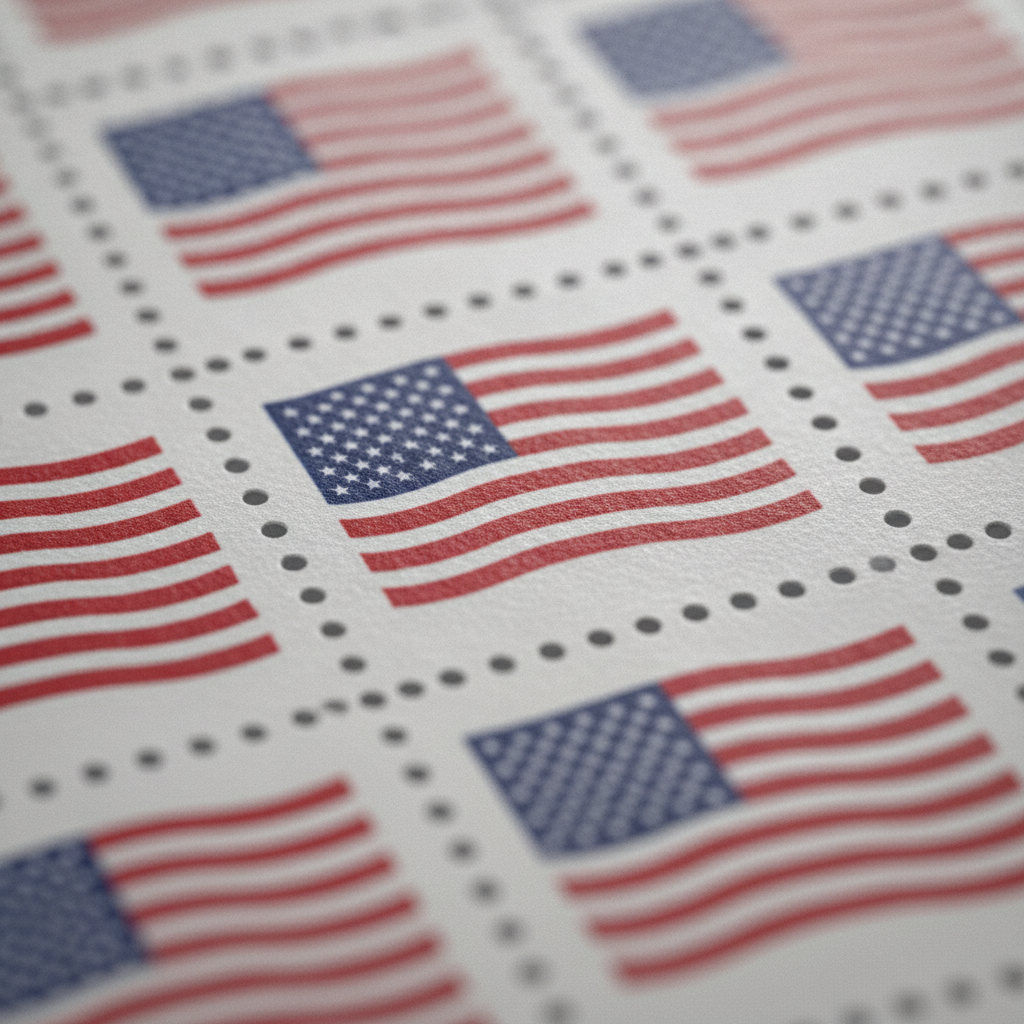
Among the various designs offered to the public, none are more ubiquitous than the standard flag stamps. These issues depict the American flag in various patriotic configurations, serving as the default choice for everyday business and personal correspondence. Critics often point to these designs as a missed opportunity for artistic expression and cultural storytelling. The relentless repetition of flag imagery can feel less like a celebration of national heritage and more like bureaucratic risk aversion.
This design monotony is not accidental; it is a calculated choice driven by production efficiency and mass appeal. The production of standard definitive issues requires massive print runs that must appeal to the broadest possible demographic without court controversy. While commemorative issues celebrate specific historical figures or cultural milestones, the flag remains a neutral, universally accepted symbol. For the postal service, minimizing design controversy is essential to maintaining steady sales across diverse regions.
Furthermore, the high volume of these issues allows for optimized printing processes that lower the unit cost of production. Specialized security features, such as microprinting and phosphorescent inks, are easier to standardize across a single, long-running design series. Thus, the aesthetic monotony of the flag design serves a dual purpose of political neutrality and manufacturing efficiency. It is a pragmatic compromise between cultural representation and industrial scale.
Aesthetic Value vs. Utility in Modern USPS Stamps
While the standard flag issues dominate the market, the postal service continues to release a wide array of commemorative usps stamps annually. These limited-edition releases cater to collectors and those seeking to add a personal touch to their correspondence. However, from a purely functional perspective, a highly artistic commemorative stamp carries the exact same mailing power as its standard counterpart. This creates a fascinating dichotomy between the collector value and the utilitarian value of the paper.
For philatelists, the value of a stamp is determined by rarity, condition, and historical significance. Conversely, the average consumer views these items solely through the lens of utility, prioritizing convenience and cost. The postal service must continuously balance these two market segments, ensuring that commemorative designs do not disrupt the automated sorting machines. Consequently, modern design choices are heavily constrained by the technical requirements of high-speed optical character recognition systems.
This technical constraint often limits the physical size, shape, and paper texture of modern releases. Even the adhesive backing must be carefully engineered to prevent peeling during transit while remaining easy for consumers to apply. Thus, the final product is always a compromise between artistic vision and industrial engineering. It is this tension that defines the unique aesthetic of contemporary postal design.
The USPS Business Model and the Cost of Mail
To fully appreciate the pricing trajectory of stamps, one must analyze the broader financial health of the United States Postal Service. Unlike typical government agencies, the postal service operates primarily on revenue generated from its products and services. This self-funding model has been severely strained by the decline in first-class mail volume, which historically generated the highest profit margins. As a result, the agency has had to rely on aggressive pricing strategies to cover its massive fixed network costs.
The cost of maintaining a physical delivery network that reaches every address in the nation is immense and largely inelastic. Whether a carrier delivers one letter or one hundred to a specific address, the cost of the vehicle, fuel, and labor remains virtually the same. To offset the revenue lost from declining volumes, the postal service has implemented frequent, incremental rate increases. This has led to a situation where the nominal price of postage has risen sharply over a relatively short period.
This pricing strategy, while necessary for short-term survival, risks accelerating the migration to digital alternatives. As the cost of mailing a physical document increases, businesses are incentivized to transition their billing and communications to electronic platforms. This creates a feedback loop where higher prices lead to lower volumes, which in turn necessitate even higher prices. Breaking this cycle remains one of the most significant challenges facing postal leadership today.
The Impact of Price Hikes on Small Businesses and Bulk Mailers
The escalating cost of postage is not a minor inconvenience; it represents a significant operational challenge for small businesses and bulk mailers. Organizations that rely on direct mail marketing or physical invoicing must absorb these price increases, directly impacting their bottom lines. Unlike large corporations with massive shipping volumes, small enterprises often lack the leverage to negotiate discounted commercial rates. Consequently, they bear a disproportionate burden of the rising costs associated with physical correspondence.
To mitigate these expenses, many businesses are forced to audit their mailing practices, seeking efficiencies in weight and distribution. The transition to lighter paper stocks, optimized envelope designs, and targeted mailing lists has become essential for survival. Additionally, some businesses are adopting hybrid models, combining physical mailers with digital follow-ups to maximize the return on their postage investment. This strategic adaptation highlights how economic pressure drives innovation even within traditional communication channels.
Moreover, the rising cost of postage has forced a reevaluation of the value of physical mail itself. In a saturated digital environment, a physical letter or catalog carries a higher level of engagement and prestige than an email. Businesses are beginning to view physical mail not as a default communication tool, but as a premium marketing channel. This shift in perception may ultimately stabilize mail volumes, as quality of engagement replaces sheer quantity.
Future Outlook: Will Digital Solutions Render Physical Stamps Obsolete?
The rapid advancement of secure digital communication platforms raises a fundamental question about the long-term viability of physical mail. Cryptographic signatures, secure client portals, and instant payment systems have largely replaced the need for paper checks and physical contracts. In this context, the traditional postage stamp appears to be an anachronism destined for obsolescence. Yet, physical mail possesses unique characteristics that digital alternatives have struggled to replicate entirely.
The physical delivery of goods and documents offers a level of security and tangible verification that digital systems cannot match. A physical signature on a paper document remains the gold standard for many legal and financial transactions. Furthermore, the universal service mandate ensures that every citizen, regardless of digital literacy or internet access, remains connected to the national infrastructure. This democratic accessibility is a core strength of the postal system that digital platforms cannot easily duplicate.
Rather than complete obsolescence, the future likely holds a deeper integration of physical and digital systems. Technologies such as Informed Delivery, which provides digital previews of incoming physical mail, bridge the gap between the two mediums. This hybrid approach enhances the value of physical mail by making it interactive and trackable. Consequently, the physical stamp will continue to play a vital role, albeit within a more specialized and technologically integrated logistics network.
Strategic Purchasing: Maximizing the Utility of Your Postage Assets
Given the volatile nature of postal rates, consumers and businesses must adopt a proactive approach to managing their mailing expenses. Purchasing standard definitive issues in bulk ahead of announced rate increases remains the most effective way to lock in lower operational costs. This simple tactic requires minimal capital outlay but can yield tangible savings over the course of a fiscal year. It is a straightforward financial decision that directly impacts the cost of doing business.
Additionally, diversifying the types of postage held in inventory can provide greater flexibility for varied mailing needs. While standard first-class issues are the most common, keeping a stock of postcard stamps and additional ounce stamps prevents overpaying on non-standard mailings. Understanding the specific weight and size regulations of the postal service ensures that you never pay more than necessary for delivery. By treating postage as a managed asset rather than an afterthought, you can navigate the rising costs of physical communication with precision and financial foresight.