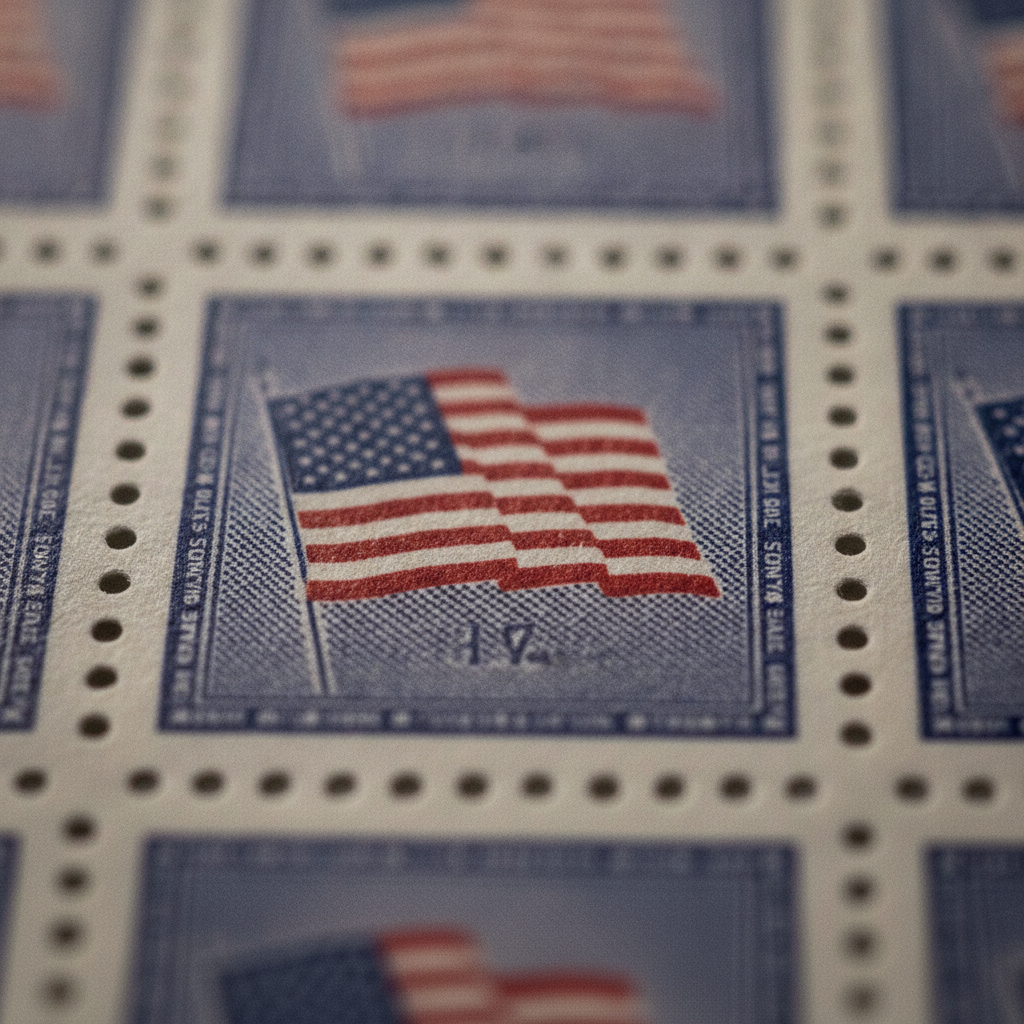
In an era dominated by instantaneous digital communication, the survival of physical postage stamps seems like an economic anomaly. Yet, these tiny, adhesive pieces of paper issued as USPS stamps remain a vital component of global commerce and national infrastructure. To view them merely as pre-paid shipping labels is to misunderstand their complex role in modern economics, state branding, and security print technology. They exist at a fascinating intersection of fiscal policy, graphic design, and cultural preservation.
As inflation continues to erode the purchasing power of fiat currency, the mechanisms we use to secure basic services deserve closer inspection. Among these, the concept of non-denominated postage has quietly revolutionized how consumers interact with postal services. By examining the structural reality of these items, we can uncover how a simple utility became a sophisticated financial and cultural instrument.
The Financial Architecture of Forever Stamps
Introduced by the United States Postal Service in 2007, forever stamps represented a paradigm shift in postal economics. Prior to this, rate increases required consumers to purchase tedious low-value stamps, such as one-cent or two-cent denominations, to make up the difference on older inventory. The introduction of non-denominated postage permanently decoupled the purchase price from the future cost of mailing a first-class letter.
From an analytical perspective, these stamps function as a micro-commodity hedge against inflation. When consumers purchase them in bulk, they are essentially buying future delivery services at today’s prices. For the issuer, this system generates immediate liquidity and reduces the operational costs associated with printing and distributing low-value transitional postage. It is a rare financial transaction where both the consumer and the state agency find mutual administrative relief.
However, this model also shifts the burden of long-term economic forecasting. The USPS must balance the immediate cash flow generated by large-scale sales against the future operational costs of delivering those letters years down the line. As fuel prices fluctuate and labor costs rise, the true cost of delivery may outpace the initial purchase value, making the management of these liabilities a complex fiscal balancing act.
Semiotics of the Flag: Aesthetic Monotony in Flag Stamps
No single category of postage is as pervasive or as heavily printed as flag stamps. These issues serve a dual purpose: they satisfy the bureaucratic need for a standardized, universally recognizable design while projecting a specific national narrative. From a design standpoint, the evolution of the flag stamp reflects shifting trends in security printing and public imagery.
Critics often argue that the constant re-issuance of the American flag on postage represents an aesthetic monotony. While commemorative issues celebrate diverse historical figures and cultural milestones, the flag remains the default option for bulk business and everyday consumer mail. This high-volume production ensures that the national symbol is integrated into the mundane, daily transactions of millions of citizens, reinforcing state identity through repetition.
Furthermore, the design choices of these stamps are highly deliberate. The imagery must be clean, patriotic, and difficult to replicate illicitly. Modern flag designs often incorporate complex background patterns, microprinting, and specialized inks that serve as covert security features. Thus, what appears to the average consumer as a simple patriotic gesture is, in reality, a highly engineered security document designed to protect postal revenue.
Counterfeiting and Security in Modern USPS Stamps
As the face value of postage stamps continues to rise, they have increasingly become targets for sophisticated counterfeiting operations. The rise of e-commerce platforms has facilitated the distribution of high-quality fake stamps, often sold at steep discounts. This illicit market deprives the postal system of crucial revenue, forcing authorities to implement advanced forensic technologies.
To combat this, modern usps stamps utilize a variety of security measures that rival those found in paper currency. Phosphor tagging is perhaps the most critical of these technologies. When mail passes through automated sorting machines, it is exposed to ultraviolet light, causing the phosphor in the stamp’s ink to glow. This allows the machinery to verify the stamp’s authenticity and determine its physical position on the envelope for cancellation.
Additionally, security printers employ microprinting—text so small that it appears as a solid line to the naked eye but becomes legible under magnification. Specialized die-cutting techniques also create unique perforation patterns that are difficult to replicate on standard commercial cutting equipment. These covert and overt features transform a simple adhesive label into a high-tech barrier against organized fraud.
The Philatelic Illusion: Collectibility vs. Utility
For over a century, stamp collecting was hailed as the king of hobbies, serving as both an educational pursuit and a speculative investment market. However, the dynamics of modern philately have shifted dramatically. The distinction between stamps produced for actual mail delivery and those manufactured primarily for the collector market has never been wider.
The secondary market for modern commemorative stamps has largely collapsed due to overproduction. During the mid-to-late 20th century, postal administrations worldwide realized they could generate pure profit by printing stamps that would never be used to mail letters. Because collectors archive these items in albums, the postal service never has to perform the delivery service associated with the purchase price.
This artificial scarcity model eventually saturated the market, leaving millions of collectors with vast accumulations of stamps that are worth only their face value—and often even less when sold in bulk. Today, serious philatelists focus their attention on historical rarities, postal history, and specialized errors, leaving modern commemorative issues to serve primarily as colorful novelties rather than viable investment assets.
The Rise of the Practical Consumer
As speculative interest has waned, the primary consumer base for postage has returned to its utilitarian roots. Most buyers are not interested in the historical significance of a commemorative issue; they require reliable, standardized postage stamps to facilitate bill payments, RSVP cards, and legal correspondence. This pragmatic demand keeps the postal system functioning despite the digital transition.
The Niche Market of Custom and Commemorative Issues
Despite the dominance of standard designs, specialized stamps still hold a unique cultural value. They serve as a form of state-sponsored recognition, honoring individuals, historical events, and natural wonders. While they may not appreciate in monetary value, they offer a tangible connection to national heritage in an increasingly virtual world.
Environmental Footprints of the Self-Adhesive Era
The transition from water-activated gummed stamps to self-adhesive varieties in the late 20th century was a massive victory for consumer convenience. No longer did users have to lick the back of a stamp or use a damp sponge. However, this convenience introduced new environmental and recycling challenges that are rarely discussed in public forums.
Self-adhesive stamps require a silicone-coated release liner, which is typically discarded immediately after the stamp is peeled away. These liners are difficult to recycle and contribute to landfill waste on a massive scale. Furthermore, the pressure-sensitive adhesives used on modern stamps can interfere with the paper recycling process, as they do not dissolve easily in water and can clog machinery at recycling facilities.
To mitigate these issues, research has gone into developing benign adhesives that break down more easily during the pulping process. However, balancing the environmental impact with the need for an adhesive that can withstand varying temperatures and humidity levels during transit remains a significant engineering challenge. The material science behind these everyday items is a testament to the hidden complexities of modern logistical networks.
The Enduring Relevance of Physical Verification
Despite the rapid expansion of digital alternatives, the physical stamp remains an irreplaceable tool for secure verification. A postmark on a physical envelope carries legal weight that an email timestamp often cannot replicate. It serves as proof of mailing on a specific date, a critical factor in legal proceedings, tax filings, and official notifications.
This legal and operational reality ensures that physical postage will not disappear anytime soon. The tangible nature of a stamped envelope provides a level of security, deliberate intent, and historical record that digital systems struggle to match. As we look to the future, the evolution of these tiny engravings will continue to mirror the technological and economic shifts of the society they serve.
Understanding the multi-faceted nature of modern postage allows us to appreciate these items not just as relics of a bygone era, but as active, highly engineered participants in our daily lives. Whether used as an inflation hedge, a security document, or a piece of miniature art, the humble stamp remains a cornerstone of global communication infrastructure. By paying closer attention to these daily objects, we gain a clearer insight into the complex systems that keep our world connected.