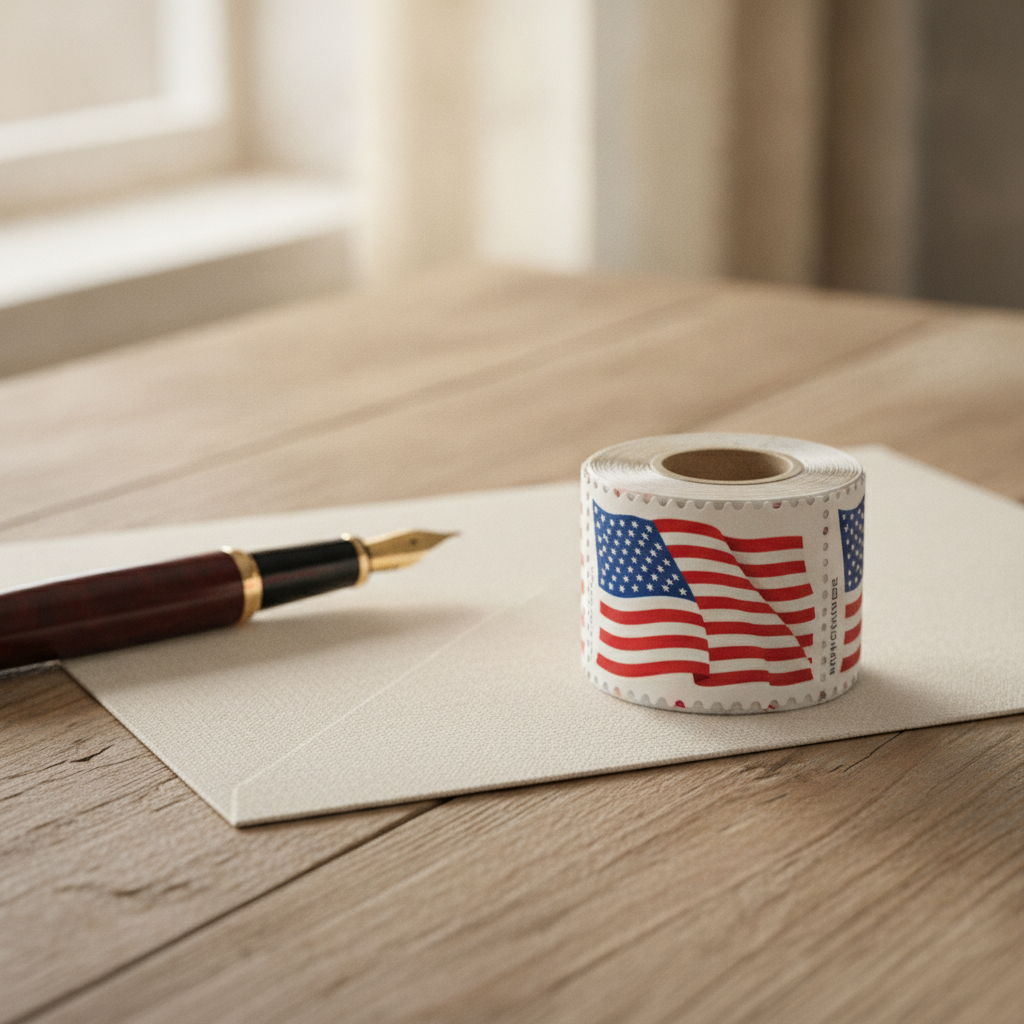
Sending physical mail efficiently requires understanding how modern postage works. In this comprehensive guide, you will learn how forever stamps maintain their utility over time, how to identify genuine flag stamps, and how to calculate exact postage for domestic mail. Whether you are mailing wedding invitations, handling daily business invoices, or collecting classic designs, understanding the mechanics of these non-denominational stamps ensures your letters always reach their destination without being delayed or returned for insufficient postage.
- Inflation Protection: Forever stamps always match the current First-Class Mail one-ounce rate, regardless of when they were purchased.
- Design Consistency: Flag stamps are the most widely produced definitive postage, offering a classic look for business and personal correspondence.
- Smart Sourcing: Buying from authorized retailers protects you from the growing market of counterfeit postage.
How Do Forever Stamps Protect You Against Rate Increases?
The United States Postal Service introduced the non-denominational postage concept in 2007 to simplify the mailing process. Before this change, every rate increase required consumers to purchase low-value stamps (such as one-cent or two-cent varieties) to make up the difference on their existing envelopes. Now, a single stamp covers the first ounce of a standard letter indefinitely.
Because these stamps do not have a monetary value printed on them, they remain valid for domestic First-Class Mail forever. If you buy a sheet today, you can use those identical stamps ten years from now, even if the nominal cost of postage doubles in the interim. This makes them a highly stable, physical asset for high-volume mailers.
Why the U.S. Flag Stamp Remains an Enduring Classic
Within the postal system, stamps are divided into two primary categories: commemorative and definitive. Definitive stamps are designed for daily, utilitarian use and are printed in massive quantities over several years. The U.S. flag stamps are the quintessential example of definitive postage, representing national identity while meeting the daily needs of millions of mailers.
While commemorative designs rotate frequently to celebrate historical figures, nature, and cultural milestones, flag designs are updated periodically with subtle artistic variations. These variations allow the postal service to update security features and refresh the visual presentation of the national flag. Their widespread availability in sheets, booklets, and convenient coils of 100 makes them the default choice for automated business mailing systems.
How to Detect Counterfeit Stamps and Buy Safely
With the rise of online discount marketplaces, counterfeit postage has become a sophisticated and growing challenge for consumers. Scammers often advertise bulk rolls of stamps at steep discounts of up to 50% off face value. However, using these fraudulent items is a federal offense that can result in your mail being confiscated or returned to sender with a penalty fee.
To protect your mailings, always purchase your postage from secure, verified sources. According to the United States Postal Service warning on counterfeit postage, buying directly from post offices or authorized retail partners is the only way to guarantee authenticity. Genuine postage features advanced security measures, including microprinting, specialized paper fibers, and phosphorous ink that glows under ultraviolet sorting machines.
Determining Postage Requirements for Heavy or Oversized Mail
While a single stamp is sufficient for the vast majority of standard letters, understanding physical mail limits prevents deliverability issues. A standard First-Class envelope must weigh one ounce or less, be rectangular, and meet specific thickness requirements. If your letter exceeds these dimensions, or if it weighs more than one ounce, additional postage is required.
For envelopes weighing between one and over three ounces, you do not need to stack multiple standard stamps, which often leads to overpayment. Instead, you can pair a single standard stamp with an “additional ounce” stamp. For oversized or rigid items, such as square wedding invitations or heavy cardstock, a non-machinable surcharge stamp must be applied to cover the manual sorting process.
Historical Postage Value Trends: A Smart Buying Strategy
When the first non-denominational postage was issued in 2007, it cost exactly 41 cents. Over the subsequent decades, structural adjustments and operational changes have steadily driven the price of First-Class Mail upward. This consistent upward trajectory highlights why purchasing postage in bulk before scheduled rate adjustments is a highly practical financial strategy.
For small businesses and organizations that rely heavily on physical billing, direct mail marketing, or client correspondence, buying coils of 100 stamps ahead of announced rate hikes provides a modest but measurable hedge against inflation. Because the utility of the stamp never depreciates, your pre-purchased inventory remains fully functional at the higher rate class without any additional cash outlay.
To optimize your outbound mailing strategy, audit your current supply of postage and estimate your mailing volume for the upcoming quarters. If a postal rate increase is on the horizon, purchasing a few extra booklets or coils of flag designs now will lock in current prices and streamline your administrative operations for months to come.